Home / Blog / Monolith vs Microservices
Custom Software Development

Monolith vs Microservices: Which Architecture Actually Fits Your Business?
AS Ajish Stephen · August 1, 2026 · 7 min read
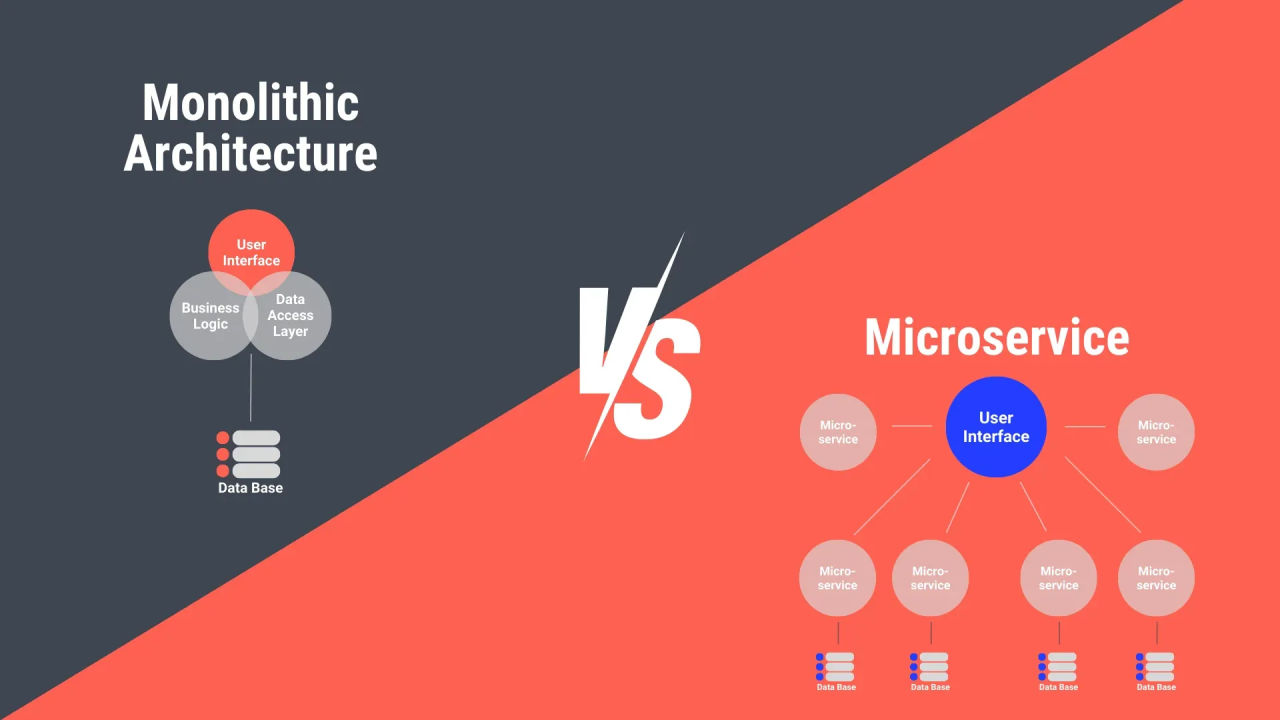
Diagram comparing monolithic and microservices architecture

Every few years, a new architectural pattern becomes the default answer to "how should we build this?" Right now, that pattern is microservices. But architecture decisions made because something is popular — rather than because it fits your actual constraints — tend to cost far more than they save.

What a monolith actually means

A monolithic application is a single, unified codebase where all your business logic, data access, and UI (or API) layers live together and deploy as one unit. This isn't a legacy pattern to be embarrassed about — it's how most successful products start, and how many stay for years. A well-structured monolith with clear internal boundaries between modules can be just as maintainable as a microservices setup, without the operational overhead.

What microservices actually solve

Microservices split an application into independently deployable services, each owning a specific piece of business logic and its own data. The benefit isn't "more modern code" — it's independent scaling, independent deployment, and the ability for separate teams to own separate services without stepping on each other. Those benefits matter enormously at a certain scale of team size and traffic. Below that scale, they mostly translate into extra network calls, extra infrastructure, and extra places for things to fail.

When a monolith is the right call

Your team is small enough that everyone can reasonably understand the whole codebase
You're still validating the product and expect the domain model to change frequently
Traffic and load don't yet require independent scaling of different parts of the system
You want to ship features fast without coordinating deployments across services

When microservices earn their complexity

Different parts of your system have genuinely different scaling needs — for example, an image-processing service under heavy load shouldn't force you to scale your entire billing system alongside it
Multiple teams need to own and deploy their parts of the system independently, without a single release train
You have the operational maturity for distributed tracing, service discovery, and inter-service failure handling — this isn't optional once you're distributed

The decision that actually matters

The real question isn't "which architecture is better" — it's "what does my team need to be able to do in the next 12 months, and what's the smallest architecture that lets us do it." I've built both well-structured monoliths that scaled fine for years, and microservices architectures for clients whose team size and traffic patterns genuinely justified the added complexity. The mistake is picking the pattern before understanding the constraint.

If you're weighing this decision for your own product, I help businesses work through exactly this trade-off as part of custom software development engagements — starting from your actual growth plan rather than a default answer.

Common questions

Should a startup use microservices from day one?
Usually not. Most startups are still validating their product, which means the data model and business logic change often. A monolith is far easier to refactor quickly. Microservices add coordination overhead that rarely pays off until the team and traffic have grown enough to need independent scaling.
Can I migrate from a monolith to microservices later?
Yes, and it's a common, healthy path. A well-structured monolith with clear internal module boundaries is much easier to split into services later than a tangled one. Building with clean boundaries from the start keeps that option open without paying the full cost of microservices upfront.
Does microservices architecture always cost more to run?
In most cases, yes, at least initially. Running multiple independently deployed services means more infrastructure, more monitoring, and more operational complexity than a single deployable unit. That cost is worth paying only once the scaling or team-independence benefits actually apply to your situation.
What's the biggest mistake teams make with this decision?
Choosing microservices because it's the trend, not because their team size, traffic pattern, or organizational structure actually needs it. The complexity should be justified by a real constraint you're hitting today, not a scaling problem you might have someday.
Working through this decision for your own project?
I help businesses choose the right architecture based on their actual scale, not the trend.
Explore Custom Software Development →
© Copyright 2024 Ajish Stephen