
Microservices vs Monolith: Choosing the Right Architecture for Your System
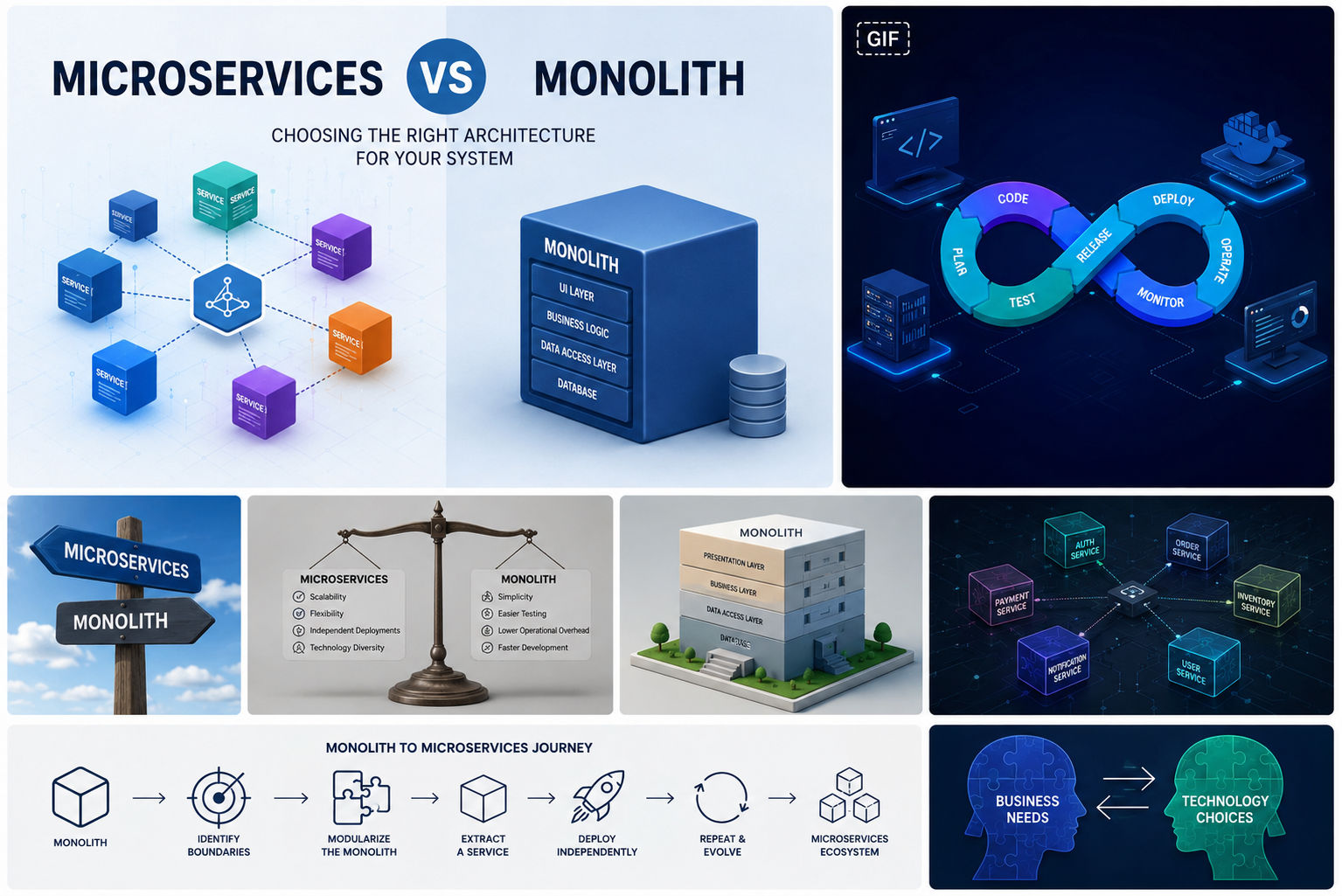
Every growing system eventually asks the same question: keep everything in one codebase, or start splitting it apart? Neither answer is universally right. The choice between a monolith and microservices is really a trade-off between simplicity and independence — and getting it wrong in either direction is expensive. This guide walks through what each approach actually looks like in practice, when each one wins, and how teams migrate between them without breaking their product.
What a monolithic architecture actually is
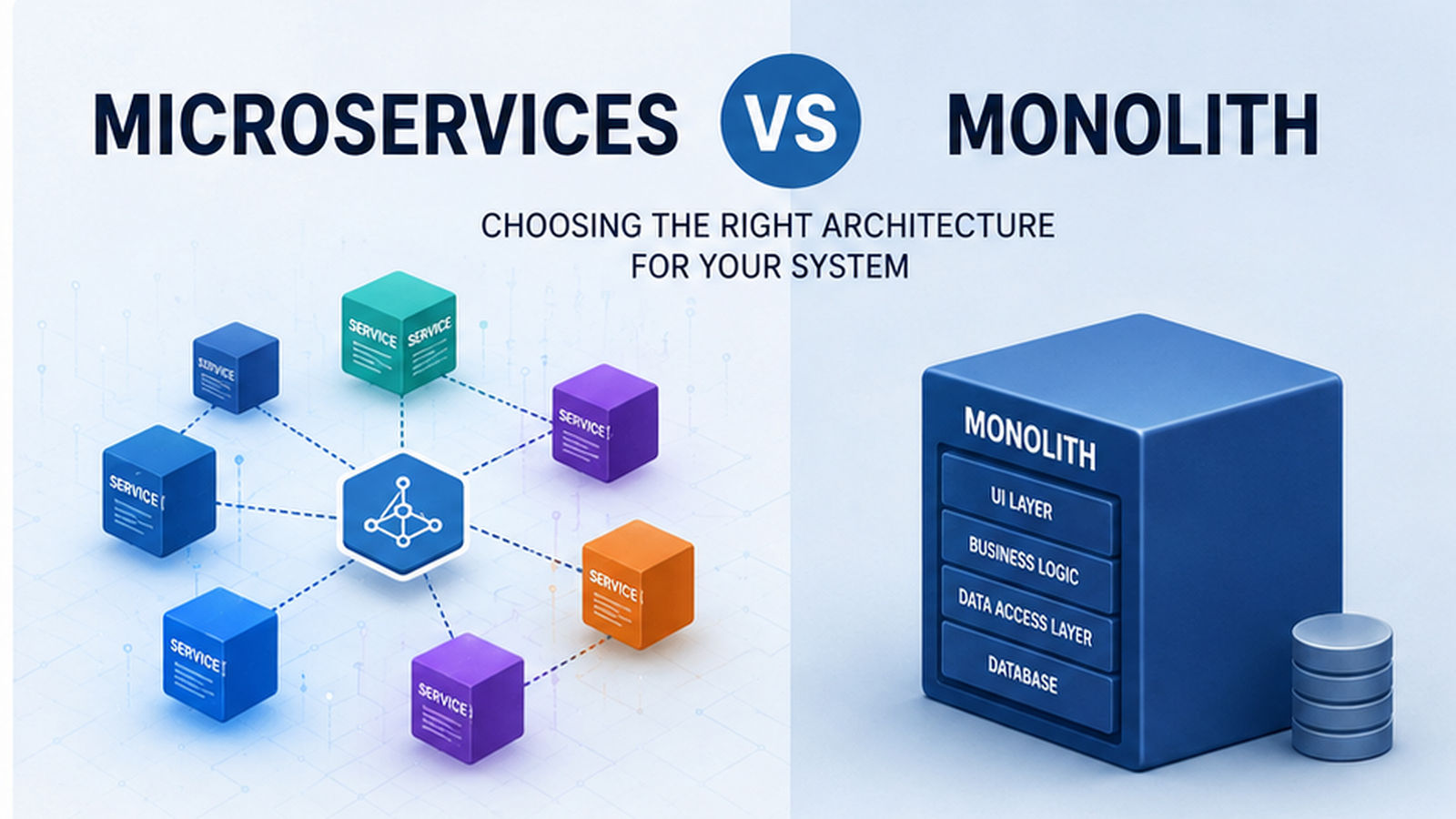
A monolith is a single deployable application — one codebase, one build, one process (or a small fleet of identical processes behind a load balancer). All modules — auth, billing, notifications, catalog — live together and talk to each other through in-process function calls rather than the network.
What a microservices architecture actually is
Microservices split the same functionality into independently deployable services, each owning its own data and communicating over the network — typically REST, gRPC, or async messaging. Each service can be built, scaled, deployed, and owned by a different team on its own schedule.
Side-by-side comparison
| Dimension | Monolith | Microservices |
|---|---|---|
| Deployment | Single unit, simple pipeline | Many independent pipelines |
| Scaling | Whole app scales together | Scale each service independently |
| Data | Usually one shared database | Each service owns its own data |
| Failure mode | One bug can affect whole app | Isolated, but partial-failure handling required |
| Operational overhead | Low | High — service mesh, tracing, discovery |
| Best team size | Small to mid-size, single team | Multiple teams, clear domain boundaries |
When to choose which
Choose a monolith when the team is small, the domain is still being figured out, or the product is early-stage and requirements shift weekly. A modular monolith — clean internal boundaries, one deployable — gives almost all the design benefits of microservices without the network overhead.
Choose microservices when specific parts of the system have genuinely different scaling needs, release cadences, or ownership — and when the organization already has the platform maturity (CI/CD, observability, on-call practices) to run distributed systems reliably.
Migrating from monolith to microservices
The safest path is incremental, not a rewrite. The strangler fig pattern — extracting one well-understood module at a time behind a stable interface, while the monolith keeps running — lets teams de-risk the migration and reverse course if a boundary turns out to be wrong.
Need help deciding on the right architecture for your product, or planning a migration that doesn't put stability at risk? This is exactly the kind of work I do as part of Software Architecture consulting engagements.